Essay · Issue 07 · 2 November 2026
One street back from the river
The editors · Porto
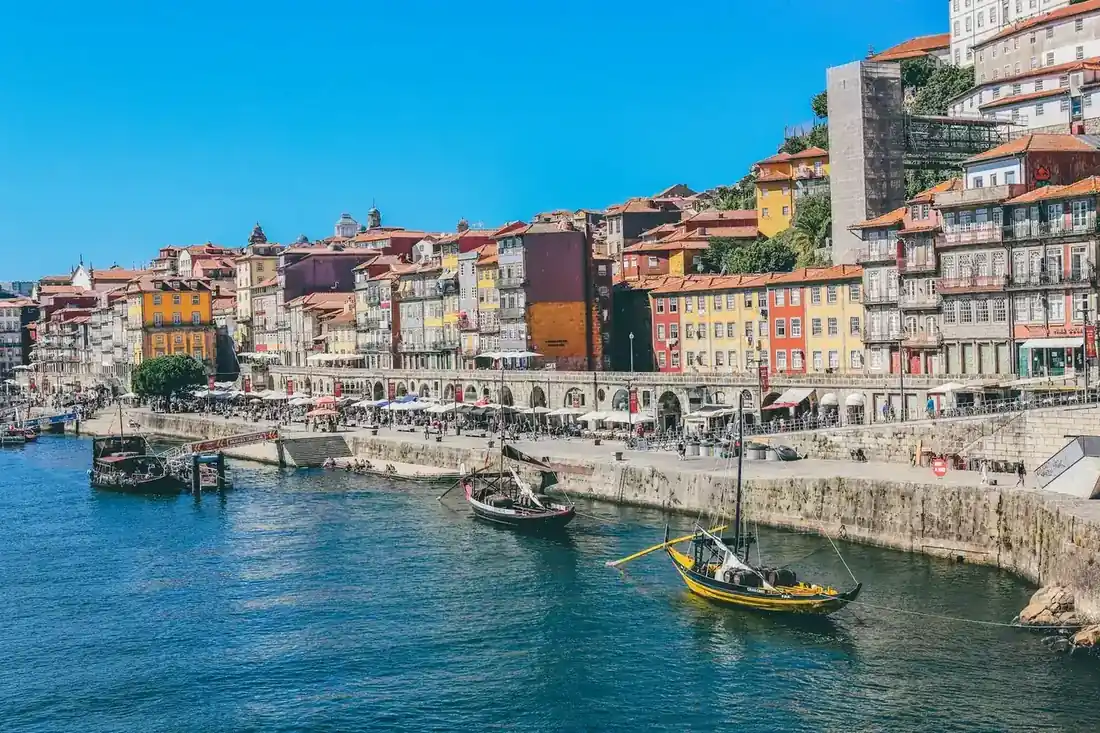
The riverfront in a high season does exactly what a city asks of a postcard. Boats, colour, a wall of windows, a stone arcade doing its old job under a new crowd. It is competent. It is also finished: nothing in the view is still deciding what it is. You can admire it and learn almost nothing about how the city is actually kept.
Walk up the first side street and the work is unfinished in the useful sense. A shop has put three chairs and a coat in the window, not a logo the size of a person. A café has a handwritten note about the kitchen closing early. Someone has swept, and then stopped sweeping at the point where sweeping becomes a performance. These are minor facts. They are also the only facts that tell you a person will be there tomorrow.
Display is a civic act when someone is still arranging it. It is advertising when the arranging is over.
We are not against the river. The river is a public room, and public rooms should be able to hold a crowd without apology. The mistake is to treat the crowd’s view as the city’s intelligence. Most of what a place knows — how bread is bought, which stair is trusted, which window is worth pausing at — sits one street back, in rooms that do not photograph as well because they are still being used.
A window owes a street three things. It owes a sign of life that is not a screen. It owes a scale a person can read without crossing the road. And it owes the dignity of not explaining itself in a paragraph of vinyl. The shops that fail these tests are not immoral. They are simply done. You can walk past a finished shop the way you walk past a closed museum: grateful it exists, unsurprised.
Betty Observer is edited from a room that fails the postcard test on purpose. The table is too small. The light is ordinary. On it, this week, three ceramic bottles and a dried stem, because the corner was too bare to think beside. We will not pretend this is a philosophy. It is a working condition. Essays get worse when the room performing them is more interesting than the thing being looked at.
If you have a street, a room, or an object that is still being arranged, that is the piece we want. Not the launch. Not the view from the boat. The Tuesday afterward, when someone has to decide what stays in the window. Send it in a few paragraphs. We read them at the same table.